Pokémon Card Condition Guide: NM, LP, MP, HP, Damaged
Two copies of the same card can be worth 10× apart, and the only difference is condition. Sellers describe it with a shorthand — NM, LP, MP — that sounds official but hides a lot of judgement. Learn what each tier really allows and how to inspect for it, and you’ll stop overpaying for “near mint” cards that a grader would call played.
The condition ladder
From best to worst, the raw-market scale runs: Mint / Near Mint (NM) — sharp corners, clean edges, no visible surface wear, maybe the faintest factory imperfection; Lightly Played (LP) — minor edge whitening or a light scratch, still attractive; Moderately Played (MP) — noticeable whitening, scratches or a soft corner, but no structural damage; Heavily Played (HP) — heavy wear, maybe a light crease; and Damaged — creases, tears, water or ink damage. Each step down is roughly a step down in price, and the drop steepens fast near the top.
Inspect it like a grader
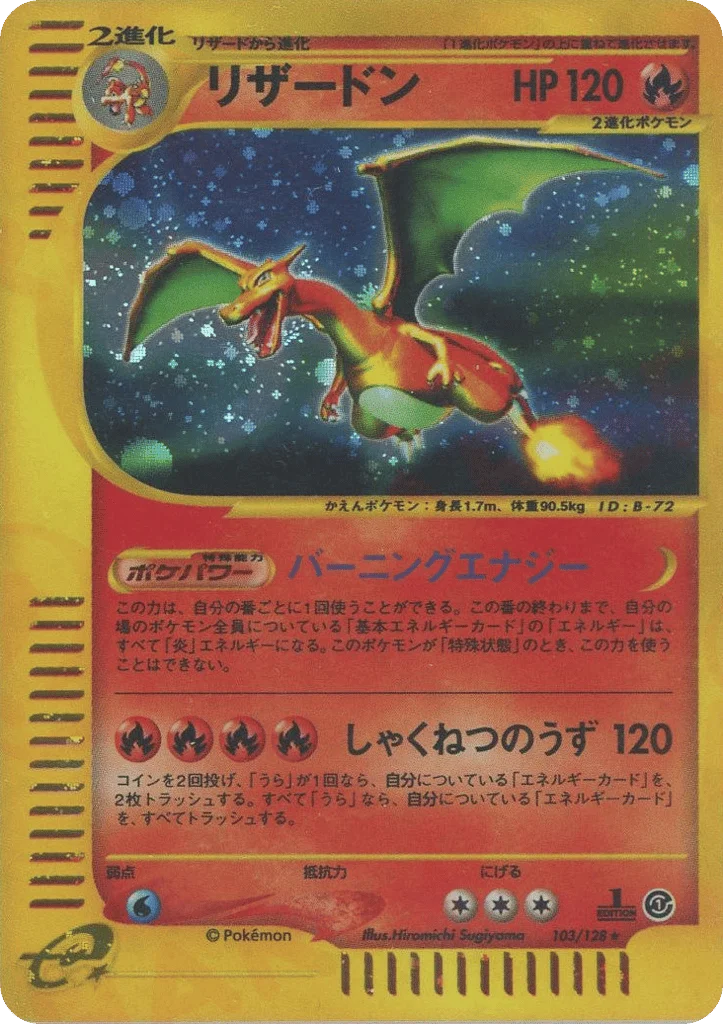
Work in good light and check five things in order: centring (how even the borders are, front and back), corners (sharp or softened/fuzzy), edges (whitening, nicks), surface (scratches, print lines, indentations — tilt the holo), and the back (whitening along the border, which collectors routinely miss). Most listings only photograph the front; the back and the centring are where the real condition hides.
Raw condition vs a graded number
A seller’s “NM” is an opinion; a graded number is a verdict with a market behind it. The gap between them is the whole game: a raw card you think is mint might grade an 8, and the price difference between an 8 and a 10 can dwarf what you saved buying raw. For vintage especially, that uncertainty is large — see how to read a vintage Japanese card. Before you pay a mint premium on a raw card, sanity-check what a graded copy actually trades at using the grading tools, and remember we price every condition on its own median — never blended.
- The ladder: NM → LP → MP → HP → Damaged, and the price drop is steepest near the top.
- Inspect in order: centring, corners, edges, surface, and the back — under good light.
- Centring and back whitening quietly cap a grade even when the front looks flawless.
- A seller’s “NM” is an opinion; a graded number has a market — mind the gap before paying mint money raw.