Pokémon Trophy Cards: The Rarest Cards Ever Made
Every “rarest cards” list eventually lands on the same category: trophy cards — prizes made for tournament winners, never sold, never printed in bulk. Where a chase card is one per several boxes, a trophy card might have a few dozen copies in existence, sometimes fewer. Some even carry the champion’s name. They are the true apex of Pokémon scarcity.
What makes a card a “trophy”
Trophy cards are custom-made prizes handed out at official tournaments and given only to top finishers. Because they’re minted for an event rather than a set, supply is capped at the number of winners — and that number is tiny. Japan ran the marquee events, so most legendary trophies are Japanese: the No.1 / No.2 / No.3 Trainer cards, Super Secret Battle, the Tropical Mega Battle, and the Lizardon/Kamex Mega Battle Pikachus.
The named ones
Some trophy cards were personalised — printed or inscribed with the winner’s name and the regional venue, which means a given design can have just one copy per event. The 2000 Tropical Mega Battle No.1 Trainer is so rare that only a single example has ever been graded by PSA. The 1999 Super Secret Battle No.1 Trainer — a finalist invitation card for a secret championship — is valued in the six figures. And the 2009 Wonder Platinum had roughly 20 copies ever circulated.
The art-contest cousin
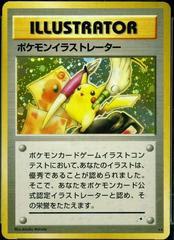
The most famous card people call a trophy isn’t one: the Pikachu Illustrator was an art-contest prize, not a tournament reward — but it shares the trophy DNA of a handful of copies and a story money can’t reprint. If apex rarity is your thing, trophies and the Illustrator are the ceiling; see where they sit among the rarest Pokémon cards and the most expensive ever sold.
- Trophy cards are tournament-winner prizes — never sold, minted in tiny numbers (sometimes a handful).
- The legends are mostly Japanese: No.1 Trainer, Super Secret Battle, Tropical Mega Battle.
- Some are personalised with the winner’s name, making certain designs one-of-a-kind.
- They rarely trade, so “value” is a single auction point — rarity and liquidity are not the same thing.