PSA 10 vs. Raw: What Grading Actually Does to a Card Price
The same card, two conditions, wildly different prices. A gem-mint slab can sell for several times the raw copy sitting next to it. None of that is arbitrary — grading converts a fuzzy, subjective “looks clean” into a number the whole market trusts, and the market pays for that certainty. Here is how the grade actually maps to the price.
What a grade certifies
PSA, BGS and CGC each assign a condition grade on a 1–10 scale after examining centering, corners, edges and surface. The slab does two things at once: it verifies the card is genuine and fixes its condition so buyer and seller no longer have to argue about it. For a high-value card, removing that uncertainty is worth real money — which is why the premium is largest exactly where authenticity and condition are hardest to judge by eye.
The grade-to-price curve is not linear
Prices do not rise in even steps from 8 to 9 to 10. They tend to jump at the top. The gap between a 9 and a 10 is usually far larger than the gap between a 7 and an 8, because gem-mint copies are disproportionately scarce and disproportionately chased. The curve steepens right at the end.
Why population drives the premium
A grade is only half the story; the other half is how many cards share it. If tens of thousands of copies grade a 10, gem-mint is common and the premium compresses. If only a few dozen do, the 10 is genuinely rare and commands a multiple. That is why we show the graded population next to every price — the same PSA 10 means something completely different on a card with 50 of them versus 5,000.

How to read a grade ladder
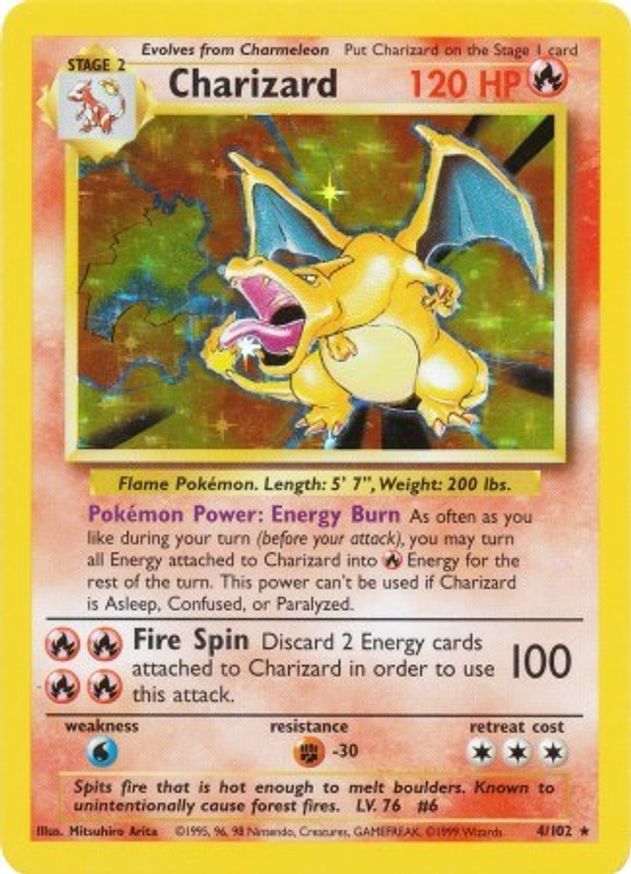
On every card page we lay the grades out as a ladder: each grade with its own median sale price, its sale count, and its population. Reading it top to bottom tells you where the demand concentrates and where the supply thins out. Open Charizard from Base Set and look at the jump from the raw mark to the top grade — then check how many copies actually exist up there. The ladder, not a single number, is the honest view of a graded card.
Because every grade is priced from the median of recent sales in that grade — never an average across grades — the ladder is internally consistent. If you want the full reasoning behind those marks, see how we calculate market cap.
- Grading certifies authenticity and fixes condition — the market pays for that certainty.
- The price curve steepens at the top: 9 → 10 is the biggest jump.
- Population decides the premium — the same PSA 10 is rare on one card, common on another.
- Read the grade ladder (price + count + population per grade), not a single number.