The Rarest Pokémon Cards Ever Made
“Rarest” and “most expensive” get used interchangeably, but they are not the same thing. A modern alt-art can be expensive because millions of people want it; a 1990s prize card can be priceless because only a dozen humans on earth own one. This is a tour of the genuinely rarest Pokémon cards — the ones defined by supply, not hype — and how to measure rarity instead of guessing at it.
Rarest is about supply, not demand
Most “rare” cards you can buy are simply expensive: chase cards with tens of thousands of copies, priced up by demand. True rarity means the supply itself is tiny — often a fixed, known number that can never grow. The rarest cards in the hobby were never sold in a booster pack at all. They were handed out, one tournament at a time, to winners.
Trophy and prize cards: the real top of the pyramid
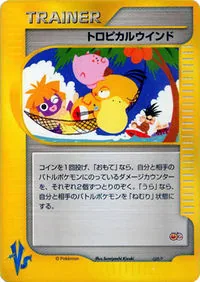
The rarest cards PokéTT tracks are Japan’s tournament prize cards. The Tropical Mega Battle cards were given to competitors at an invitation-only 1999 event in Hawaii — a few dozen copies exist, and clean ones almost never trade. The same goes for the No. 3 Trainer trophy from the Lizardon Mega Battle, part of the legendary No. 1 / No. 2 / No. 3 Trainer series awarded to the top finishers of Japan’s earliest championships.
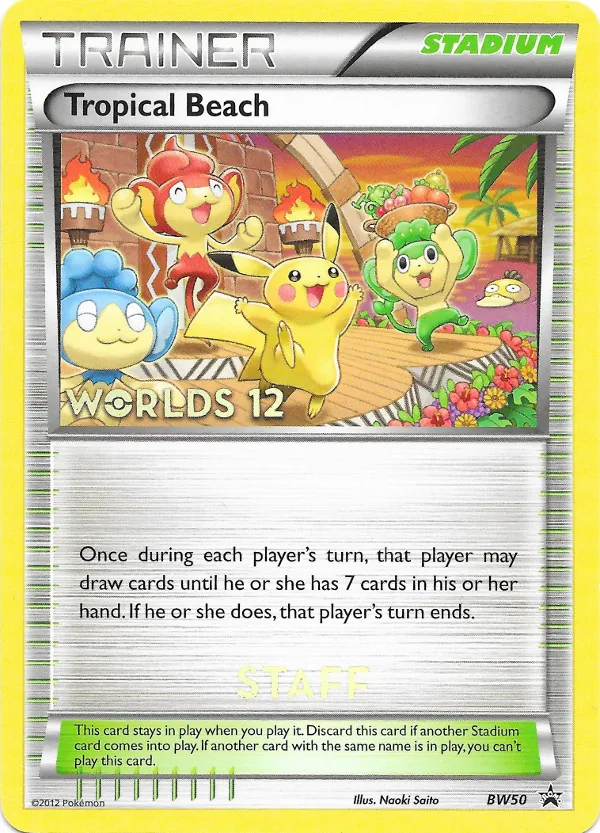
The tradition continued into the modern World Championships with the Tropical Beach staff and competitor promos — cards whose populations are measured in the hundreds, not the hundreds of thousands, which is why they hold value even though their printed playability is irrelevant. They are trophies first and cards second.
The famous one you will never own
No rarity conversation is complete without the Pikachu Illustrator — a 1998 promo for winners of a Japanese illustration contest, of which only a few dozen are believed to exist. It is both the rarest and most expensive card in the world, a gem-mint copy reportedly selling for several million dollars. It is the textbook case of why rarity and price collide at the very top: near-zero supply meeting bottomless demand. For the other record holders and what they teach you, see the most expensive cards ever sold.
How to actually measure rarity
Forget the rarity symbol — measure supply directly. Two signals do it:
1. Print run, where it is known. Prize and trophy cards usually have a fixed, documented number of copies. A card with 30 copies is a different universe from one with 30,000.
2. Graded population. For everything else, the count of copies graded by PSA, BGS and CGC is the best living proxy for how many survive in collectible condition — which is why PokéTT shows the graded population next to every price, not just the price. A high price on a high population is hype; a fair price on a tiny population is genuine scarcity. The full reasoning is in how we calculate market cap, and you can rank the whole catalogue by population and value on the screener.
- Rarest means tiny supply; most expensive means huge demand — the two only meet at the very top.
- The genuinely rarest cards are tournament trophy and prize cards (Tropical Mega Battle, No. 1–3 Trainer, Worlds Tropical Beach), never sold in packs.
- The Pikachu Illustrator is both the rarest and most expensive card — a few dozen copies, millions of dollars.
- Measure rarity with print run and graded population, not the rarity symbol printed on the card.