The Pikachu Illustrator: The Story Behind Pokémon’s $16.5M Card
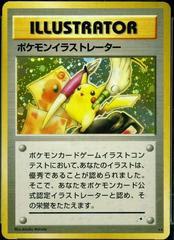
Ask anyone to name the world’s most valuable Pokémon card and they’ll say the Pikachu Illustrator — the only PSA 10 copy sold in February 2026 for a record $16.49 million, five years after it changed hands for about $5.27 million (see our record sales list). But most people get its origin wrong. It was never a tournament prize. It’s something stranger and, honestly, better: a prize for drawing.
A contest for artists, not duelists
In 1998, the Japanese magazine CoroCoro Comic ran an illustration contest: readers designed their own Pokémon card art, and the winners received a special promo. The card they won was the Pikachu Illustrator, with artwork by Atsuko Nishida — the designer who drew Pikachu in the first place. Only around 39 copies were ever awarded across the contest runs, which is why so few authenticated examples exist today.
The details that make it unique
The Pikachu Illustrator breaks the template on purpose. Where every other card of the era says “TRAINER” across the top, this one says “ILLUSTRATOR.” Where a rarity symbol would sit, there are two tiny pen-nib (drawing-pen) icons. The Pikachu itself holds a pen and has a little paint-splattered energy. It’s a card about card art — a trophy for creativity rather than competition, which is a huge part of its myth.
What it teaches about value
The Illustrator is the clearest proof that a card’s price is not its rarity label or its playability — it’s the demand for that exact object. That’s the same logic, scaled down, behind every mark on PokéTT: value is set by what people actually pay, measured as the median of recent sales, not by a letter in the corner. If the Illustrator pulled you in, the rest of the ceiling is worth a look — see the rarest Pokémon cards and the most expensive ever sold, where cards like this one define the top of the market.
- The Pikachu Illustrator was a 1998 CoroCoro art-contest prize — not a tournament trophy.
- Art by Atsuko Nishida (Pikachu’s original designer); only ~39 copies were ever awarded.
- It says “ILLUSTRATOR” instead of “TRAINER” and shows pen-nib symbols where rarity usually sits.
- Its price is rarity × demand × story — the purest example of why value ≠ rarity label.