Pokémon Card Population Reports Explained
Price has two halves: how many people want a card, and how many exist. A population report measures the second half — it’s a grading company’s running tally of how many copies of a card it has slabbed, broken down by grade. Learn to read it and “rare” stops being a vibe and becomes a number.
What a pop report actually is
When a grader certifies a card, it adds one to that card’s count at that grade. The pop report is the sum: X graded in total, of which Y came back PSA 10, Z at PSA 9, and so on. It’s the closest thing the hobby has to a live supply figure for a specific card in a specific condition — which is exactly the unit that trades.
Why low pop drives value
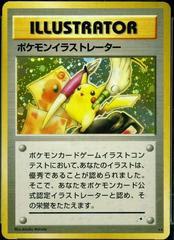
Scarcity only matters when demand meets it — but when it does, the pop report is the lever. The Illustrator Pikachu is the extreme case: a graded population you can count on one hand against worldwide demand, and the result is one of the most valuable cards in existence. Most cards aren’t that dramatic, but the principle holds all the way down the ladder — two cards with the same art and the same demand will diverge in price if one has ten times the population of the other.
The gem rate matters as much as the count
A card can be plentiful raw yet scarce in top grade. If thousands exist but only a small fraction come back PSA 10 — a low gem rate — then the PSA 10 carries a real premium even though the card “isn’t rare.” That gap between raw and gem-mint is the whole reason grade can matter more than rarity for what you pay.
How we use it
Population is half of market cap: we multiply a card’s graded population by the median of its recent graded sales to get a value for the graded supply — the same method behind every number on the site (see how we calculate value). It’s also how you separate genuinely rare cards from cards that merely feel rare.
- A population report is a grader’s count of how many it has slabbed, per grade — the supply side of price.
- Low population + real demand = premium; the Illustrator Pikachu is the extreme (a top-grade pop of one).
- Gem rate matters too: a common card can still be scarce in PSA 10.
- Caveats: each grader has its own count, and pop only grows over time — read the trend.