How to Store and Protect Pokémon Cards (Without Killing the Value)
A card’s condition only moves in one direction — down — and most of the damage is self-inflicted: sunlight, humidity, finger oils and, surprisingly often, the binder you trusted to keep it safe. The good news is that protecting a card is cheap and systematic. Match the protection to the value, control the environment, and a mint card stays mint for decades.
Know the four enemies
Nearly all card damage comes from four sources: UV light (fades ink and dulls holo), humidity (warps, clouds and can glue cards to sleeves), heat (bows the card and softens holofoil), and handling (oils, fingerprints, and the micro-dents from a careless thumb on a corner). Everything below is just a defence against one of those four.
The protection ladder
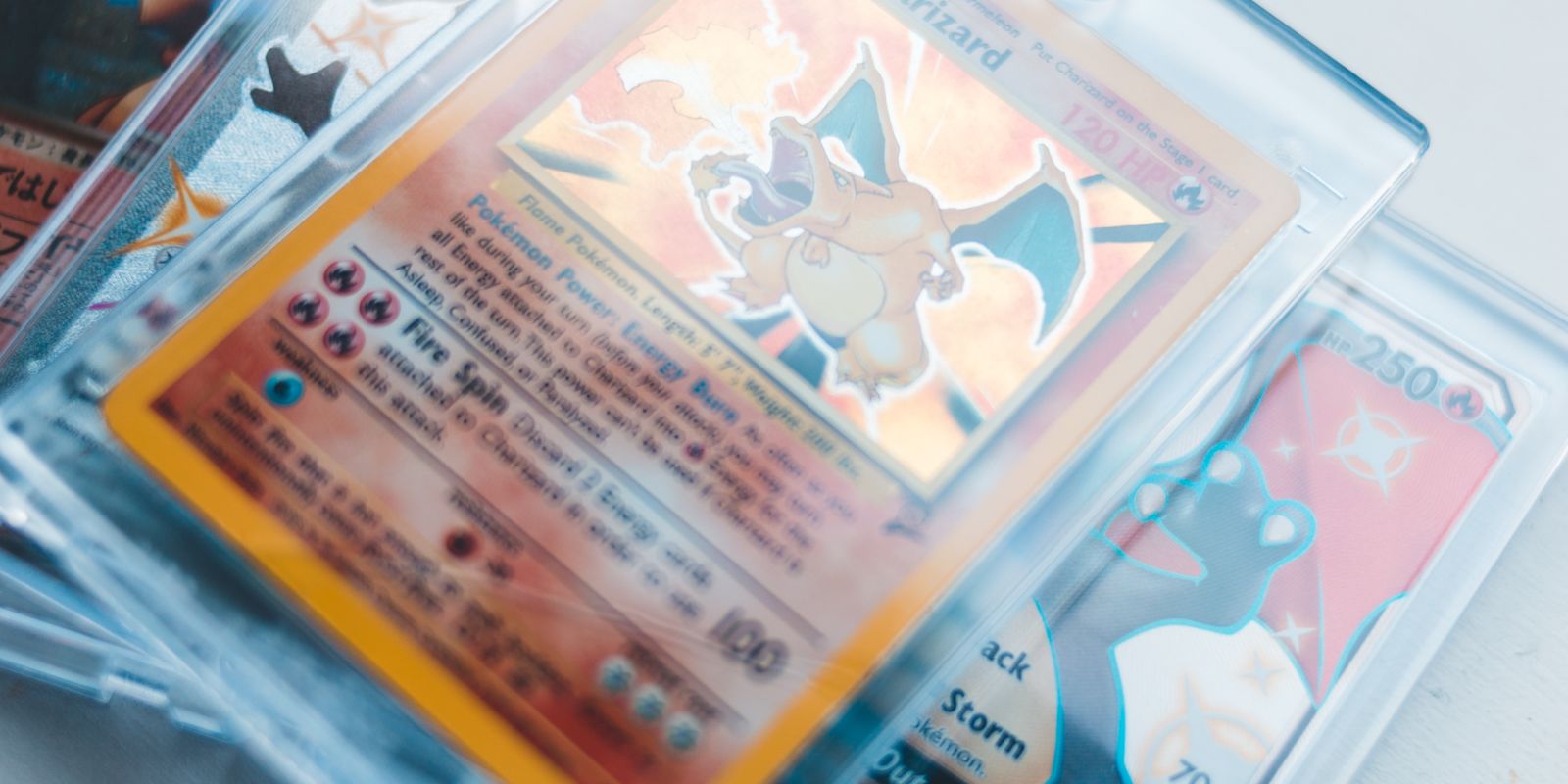
Scale the armour to the card. Bulk: a penny sleeve or a binder with side-loading, acid-free pages. Keepers: penny sleeve (seam down) inside a toploader or a snug perfect-fit sleeve first, then the toploader, so the card never rubs the hard plastic. Grails: a one-touch magnetic holder, or simply grade it — a slab is the best long-term storage there is. Add a team bag over toploaders to keep dust and moisture out.
Control the room, not just the card
Keep cards out of direct sunlight, at a stable room temperature, and at roughly 45–55% relative humidity — a cheap hygrometer and a few silica gel packs in a sealed box do most of the work. Store cards upright, never in a tall stack under their own weight (that’s how you get pressure dents and bows). Handle by the edges with clean, dry hands.
When storage becomes an investment decision
For anything genuinely valuable, grading is both protection and price certainty: the slab guards the card and fixes its condition on the record, which is why a graded card trades at a clean, liquid median while a raw one is a negotiation. If you’re holding a set sealed instead of slabbing singles, the enemies are the same — heat and humidity warp boxes too (see sealed as an investment). And whatever you’re protecting, know what it’s worth first: check it against the market on the grading tools before you decide how much armour it deserves.
- Four enemies: UV light, humidity, heat, handling. Every protection step counters one of them.
- Ladder it: penny sleeve + toploader + team bag for keepers; one-touch or a slab for grails.
- Use PVC-free, side-loading pages only — old PVC binders fog and stick to card surfaces.
- Hold ~45–55% humidity, stay out of sunlight, store upright, handle by the edges.