How Much Are Japanese Pokémon Cards Worth?
Japanese Pokémon cards are the most under-served corner of the hobby. They are printed first, often look better than their English counterparts, and the rarest ones sell for as much as any Western card — yet almost no price guide explains them in plain dollars. This is that guide: how the Japanese market is valued, where it breaks the rules you know from English, and what the grails are actually worth.
Japan is its own market — priced in yen, paid in nostalgia
Every Pokémon set launches in Japan first, so Japanese cards set the trends the English market follows months later. Prices form on Japanese platforms (in yen), which is why a card can look “cheap” or “expensive” depending purely on the exchange rate you convert through. On PokéTT every Japanese card is normalised to a USD market value from real sold prices, so you compare a Tokyo sale and a US sale on the same ruler. Flip any card or set between Japanese and English with the language toggle to see both markets side by side.
The value tiers
Vintage grails (thousands to six figures)
The top of the Japanese market is the No Rarity Base Set Charizard — the 1996 first print, missing the rarity symbol, and the Japanese answer to the 1st Edition Charizard. A gem-mint copy is one of the most valuable cards in the entire hobby. Alongside it sit the earliest holos of the WOTC era and the Tropical Mega Battle prize cards, handed to a handful of tournament winners.
Modern chase cards (tens to low thousands)
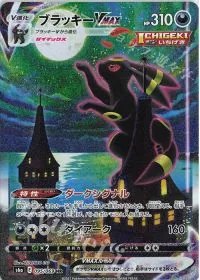
The modern Japanese market is driven by Special Art and Alternate Art rares. The defining one is the Umbreon VMAX alternate art from Eevee Heroes — “Moonbreon” — which became the most wanted modern card in the world and consistently sells higher than its English print. Others in the tier include the Rayquaza VMAX from Blue Sky Stream, the Charizard ex from Pokémon 151, and Japan-only promos like the Poncho-wearing Pikachu Charizard.
Everything else (cents to a few dollars)
The vast majority of Japanese cards — commons, uncommons, bulk holos — are worth a few dollars at most, exactly like English bulk. Value concentrates hard at the top: a tiny number of cards hold almost all the money.
Where Japanese breaks the English rules
Three traps catch collectors who assume Japanese works like English:
1. “No Rarity” is the 1st Edition equivalent. Japan never used a “1st Edition” stamp on vintage Base Set. The first print is identified by the absence of a rarity symbol — the No Rarity print. Miss it and you under-value the card by orders of magnitude.
2. Unlimited can be rarer than 1st Edition. On several Japanese e-Card sets the Unlimited print is actually scarcer (and pricier) than the 1st Edition — the opposite of English. We unpack it in 1st Edition vs Unlimited.
3. The number on the card is not always the set number. Vintage Japanese cards often print the Pokédex number, not a set position — one reason they are so easy to mis-identify. Our guide to reading a vintage Japanese card walks through the symbols.
How to value a Japanese card in USD
Identify the exact print (set, symbol, 1st Edition vs Unlimited vs No Rarity), pick the grade, then read the median of recent sales — not the cheapest listing and not one record. PokéTT does this for the whole Japanese catalogue in dollars: open any card for its per-grade ladder, browse a character on its hub, or rank the market on the screener. For the bigger picture of why Japanese is the most interesting market to track, read Japanese vs English Pokémon cards.
- Japan prints first and sets the trends; PokéTT converts every Japanese card to a real USD market value.
- Value concentrates at the top: No Rarity vintage grails and modern alt-arts like Moonbreon hold most of the money.
- Japanese breaks three English rules: No Rarity = 1st Edition, Unlimited can be rarer than 1st Edition, and the card number is often the Pokédex number.
- Value any Japanese card by identifying the exact print and grade, then reading the median of recent sales.