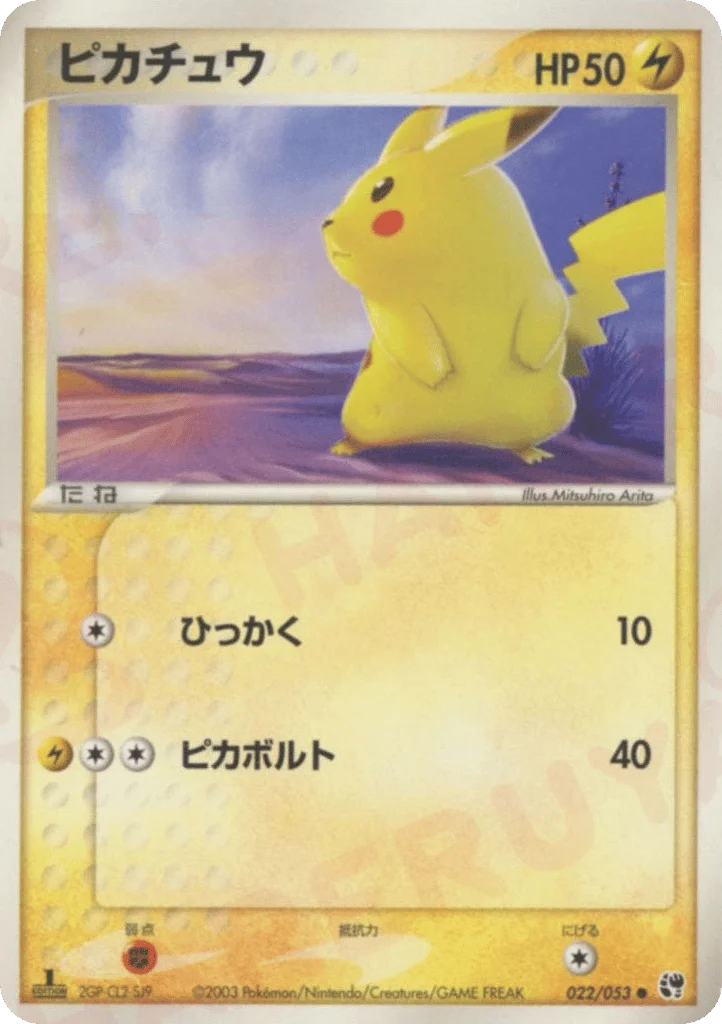
Japanese vs. English Pokémon Cards: Why They Are Two Different Markets
A Charizard is a Charizard — until you look at the bottom of the card. Japanese and English Pokémon cards share artwork and characters, but they print on different dates, in different quantities, and get graded by collectors who behave differently. Treat them as one market and the prices stop making sense. Treat them as two, and a lot of “mispricing” turns out to be perfectly rational.
Japan prints first — usually months ahead
Almost every modern set debuts in Japan before its English counterpart. The Japanese release is the source set; the English release is a re-cut, often re-numbered, sometimes merged or split across products. That lag matters for two reasons. First, the Japanese version has a head start on price discovery — the market has simply had longer to find a level. Second, English sets frequently bundle cards from several Japanese sets, so a single English set does not map one-to-one onto a single Japanese one. When you compare “the same card” across languages, you are often comparing two different print contexts.
Print runs and exclusives are not the same
Japan gets a steady stream of products that never reach the West intact: promotional cards from magazines, campaign and tournament prizes, gym and event distributions, illustrator collaborations. Many of these are genuinely scarce and have no English equivalent at all. On the other side, some English print runs dwarf the Japanese originals. The result is that scarcity — the thing collectors actually pay for — can sit on opposite sides of the same character.
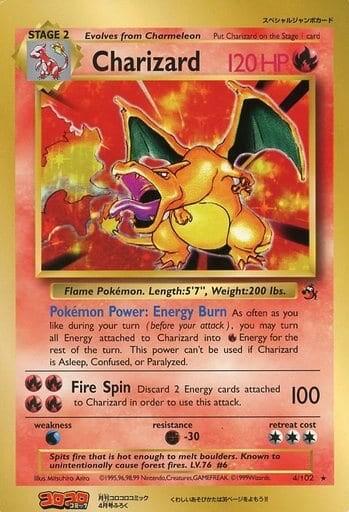
The grading populations tell different stories
Graded population — how many copies have been slabbed at each grade by PSA, BGS or CGC — is one of the cleanest scarcity signals we have. Japanese and English cards diverge here too. English vintage has been graded heavily for two decades, so its high-grade populations are large and well-mapped. Japanese vintage was graded later and less consistently, so a Japanese card can be far rarer in a gem-mint slab even when raw copies look comparable. We track these populations per card so you can see the real supply at each grade rather than guessing from a single sale.
So which is “worth more”?
Neither, as a rule. A sealed English Base Set booster and a Japanese Base Set booster answer to different buyers, different supply, and different nostalgia. What you can do is compare them on the same footing: real median sale prices in one base currency, the population behind each grade, and the volume actually trading. That is the whole point of looking at cards like a market instead of a single “last sold” number. Browse the Japanese Base Set next to its English cousin, or start from Pokémon 151, and the two-market view becomes obvious card by card.
- Japan releases first and re-cuts into English later — sets do not map 1:1.
- Scarcity sits on different sides of the same character (JP promos vs large EN runs).
- Graded populations differ: Japanese gem-mint copies are often rarer than they look.
- Compare on real median sales + population + volume, not a single last-sold price.