Japanese 1st Edition vs Unlimited: When the “Common” Print Is Rarer
English collectors learn one rule early: 1st Edition beats Unlimited. The stamped first print is the scarce one, full stop. Carry that rule into Japanese cards and you will misprice an entire era — because in Japan, the Unlimited print is frequently the rarer, more valuable one.
The stamp, and what it doesn’t tell you
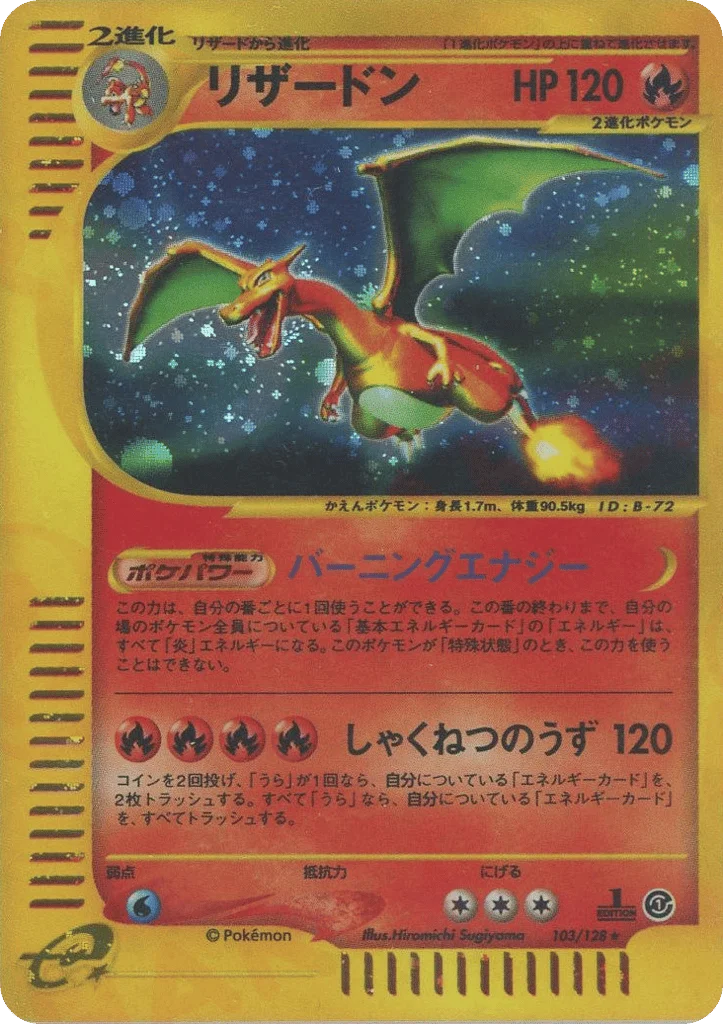
From the Neo era through the e-Card sets, many Japanese cards carry a small “1st Edition” mark (a stamped seal, much like the English one). A card without it is the Unlimited print. So far it sounds identical to English — find the stamp, find the value. But the stamp only tells you which run a card belongs to; it doesn’t tell you which run was smaller.
Which Japanese sets have the split
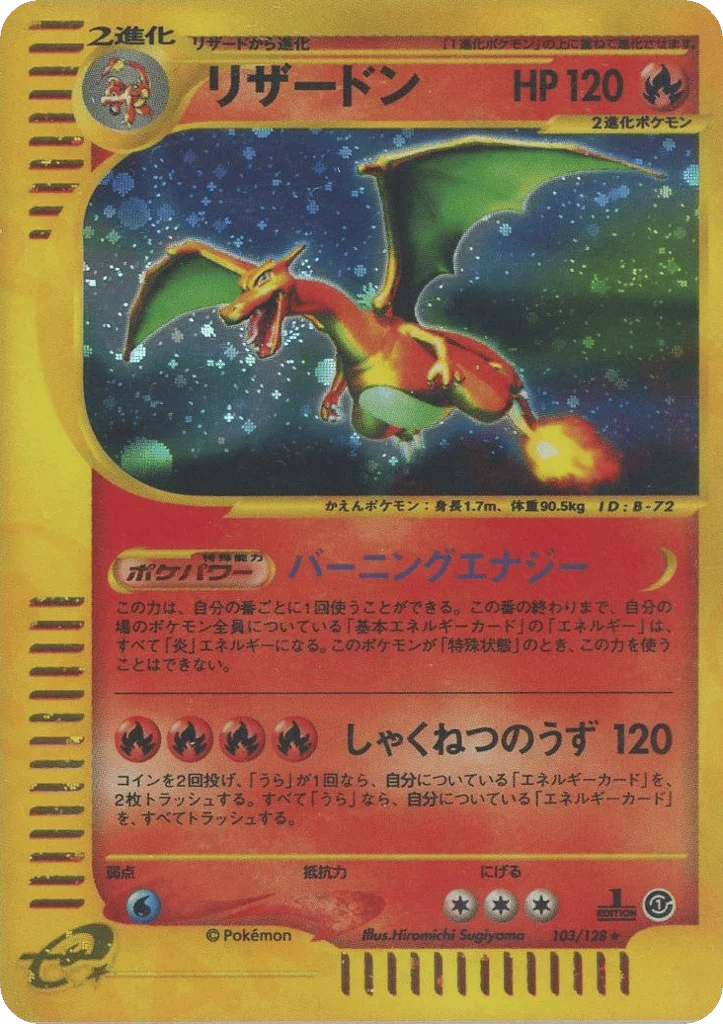
Not every set comes in two prints. The 1996 Base Set has its own first-print system (the No Rarity cards), with no 1st Edition stamp at all. The 1st Edition / Unlimited divide really belongs to the Neo era and the e-Card sets — Expedition, Aquapolis-era and Skyridge-era releases. The Expedition Charizard above is a textbook example: same art, same number, two distinct prints, two distinct markets.
How to actually price it
Because the scarcity can flip, you can’t assume “1st Edition = premium” on a Japanese card. The only safe move is to look at the two prints as separate assets and compare real sales for each, in the same grade. That’s exactly why we list the prints separately and mark each at the median of recent sales rather than collapsing them into one number — a blended price would hide the very gap you’re trying to find. (More on that in how we calculate value.)
A buyer’s checklist
Before paying a “1st Edition premium” on a Japanese card, ask three things: is there actually a stamp? (confirm the print); which run was smaller for this set? (don’t assume); and what do graded sales of each print actually show? (let the median, not the listing, set the price). Get those right and the Japanese market stops being confusing and starts being an edge — see the bigger picture in Japanese vs English cards.
- On Japanese cards, Unlimited is often rarer and pricier than 1st Edition — the reverse of English.
- The 1st Edition stamp identifies the print, not which run was smaller.
- The split lives in the Neo and e-Card eras; Base Set uses No Rarity instead.
- Price the two prints as separate assets, each at the median of recent graded sales.