
Jumpluff: English vs Japanese
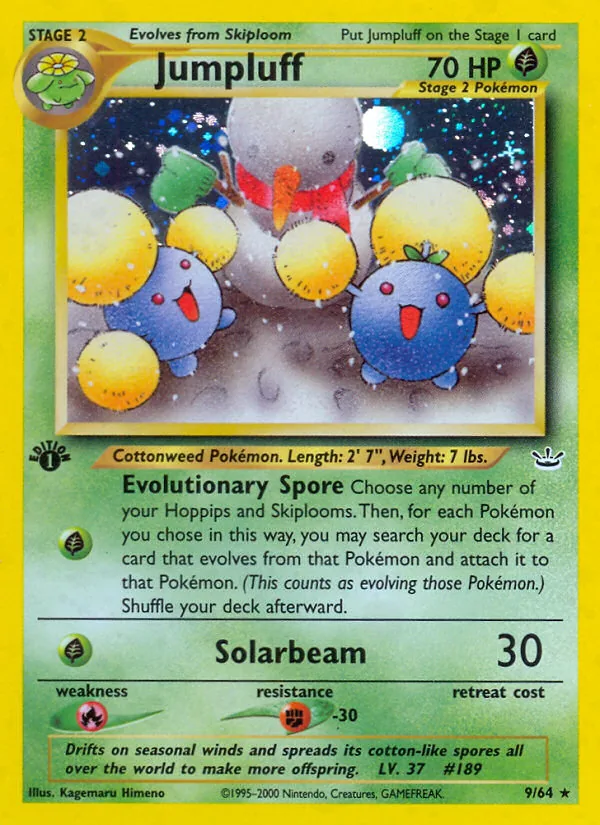
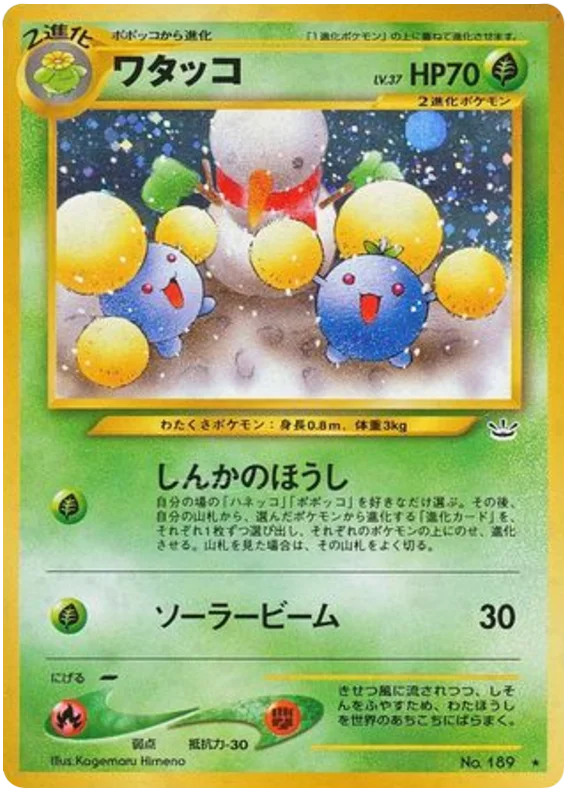
Buying Jumpluff raw? The Japanese print (Awakening Legends / Neo Revelation) is 73% cheaper than the English one (Neo Revelation): $6.24 vs $22.95.
There are not yet five recent PSA 10 sales on both sides, so we leave the graded comparison out.
Both cards carry the same Kagemaru Himeno artwork — #189 in the Japanese set, #9 in the English one.
For the record, the Japanese price is the median of 5 recent sales (newest 22 August 2026), and the English price is the median of 45 recent sales (newest 11 October 2026).
Updated 15 October 2026 from recorded sales. Prices in USD unless you picked another currency in Settings.
| Set | No. | Ungraded (median) | PSA 10 (median) | Sales behind it | |
|---|---|---|---|---|---|
| English | Neo Revelation | 9 | $22.95 | — | 45 sales |
| Japanese | Awakening Legends / Neo Revelation | 189 | $6.24 | — | 5 sales |
Ungraded prices; PSA 10 shown only where both prints have at least 5 recent PSA 10 sales. Report a wrong price
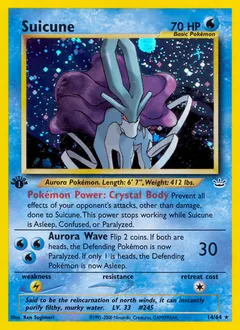
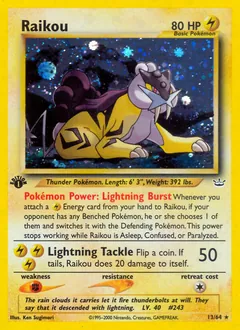
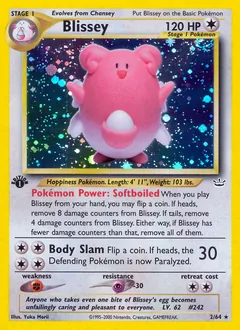
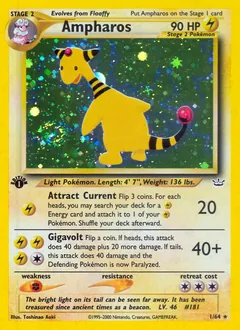
More Neo Revelation cards compared
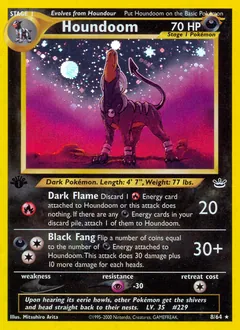
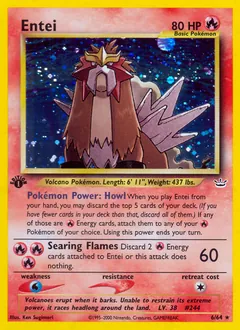
| Card | Japanese | English | JP vs EN |
|---|---|---|---|
| $49.65 | $165.00 | −70% | |
| $25.37 | $132.72 | −81% | |
| $45.98 | $100.99 | −54% | |
| $25.43 | $94.99 | −73% | |
| $14.67 | $48.23 | −70% | |
| $18.72 | $38.42 | −51% | |
| $9.80 | $36.93 | −73% | |
| $10.92 | $35.81 | −70% |
How we compare Japanese and English prints
We only pair two cards when they are the same artwork: the Japanese and English set must share a long run of cards with the same name and illustrator, and the card itself must match one-to-one on both sides. Variants (1st Edition, Shadowless, reverse holos, promos) are never paired, and a pair whose prices sit more than ten times apart is held back, because that is far more often a mismatch or a bad sale than a real market gap.
Every price is the median of real recent sales from eBay, Yahoo! Auctions Japan, Mercari and TCGplayer, converted to US dollars. Ungraded copies and graded slabs are never mixed: the main comparison is ungraded vs ungraded, and the PSA 10 column only appears when both prints have at least five recent PSA 10 sales. A price needs at least three sales and a sale in the last 90 days to be shown here; the rankings ask for five.
Price-guide estimates are never used on these pages. If one side has too few sales, we say so instead of guessing.
Why do Japanese and English prints sell for different prices?
Print runs, pull rates and where collectors live all differ. Japanese sets usually come out months earlier, often with smaller packs and better print quality, while English sets reach a much bigger player base. The gap moves over time — new English releases often start dearer and settle, vintage Japanese cards are often scarcer — which is why we show it from recent sales rather than as a rule of thumb.