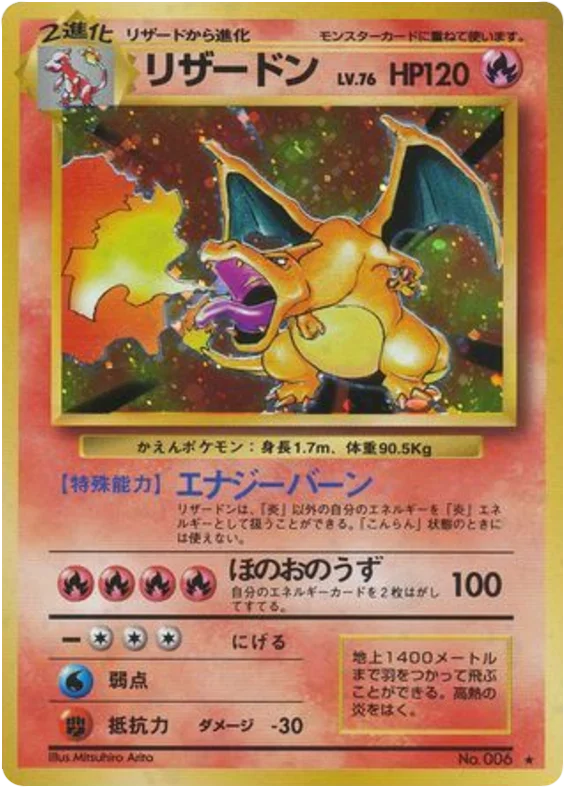
No Rarity Cards: The Japanese Base Set’s True First Print
Ask a collector for the “first edition” of the Japanese Base Set and you’ll get a correction: Japan never stamped “Edition 1” on those 1996 cards. Instead, the very first print run is known by what it’s missing — the little rarity symbol in the corner. These are the No Rarity cards, and they are the closest thing the Japanese Base Set has to a true first edition.
What “No Rarity” actually means
Look at the bottom-right corner of almost any Pokémon card and you’ll find a tiny shape: a circle for common, a diamond for uncommon, a star for rare. When the Japanese Base Set (拡張パック) launched in October 1996, that system didn’t exist yet — so the earliest cards have no symbol at all. The rarity marks only appeared with Jungle in March 1997, which is why No Rarity exists for Base Set and essentially nowhere else.
Why first-printers chase them
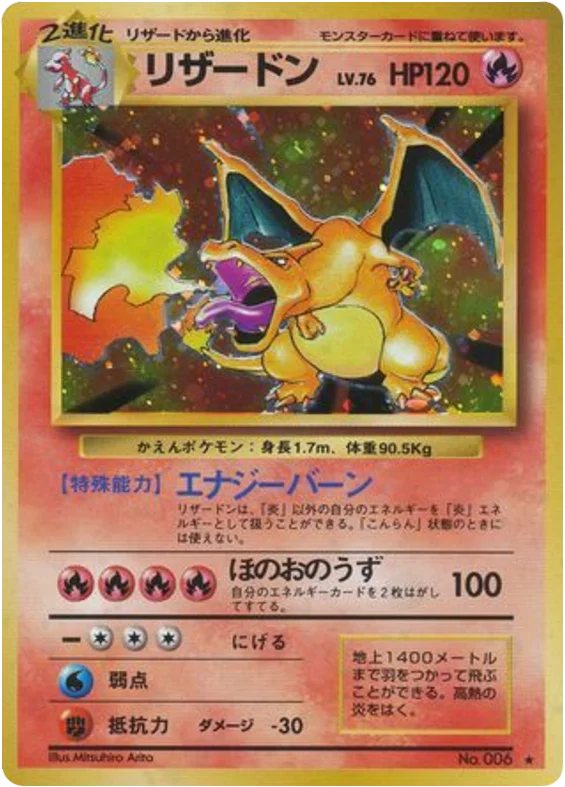
No Rarity cards were printed only in that first 1996 wave, before Pokémon became a global phenomenon, so far fewer survive than the later rarity-symbol copies. Scarcity plus the “first of everything” status makes them the premium print of the most historically important set in the hobby. In top grades the gap is enormous: the No Rarity Charizard sits in the six-figure range in a PSA 10, an order of magnitude above the standard rarity-symbol print of the same card.
It isn’t only Charizard. Every holo in the set — the rarity-symbol Charizard, Blastoise, Venusaur, Mewtwo — has a scarcer No Rarity counterpart, and the early print is where the serious money lives. You can see both prints side by side, ranked by value, on the Japanese Base Set page.
No Rarity vs the English 1st Edition
English collectors anchor on the 1st Edition stamp — a literal black “Edition 1” seal. Japan solved the same “which print came first?” problem differently: the absence of a rarity symbol is the tell. Functionally they play the same role — the rare, early, premium print — which is exactly why a Japanese-first market view matters. If you only know the English language of variants, the whole No Rarity tier is invisible to you. (We unpack the wider gap in Japanese vs English cards.)
Before you pay the premium
Two cautions. First, condition is everything at this level — a No Rarity card is only worth its headline price in a high grade, so read what grading does to a price before buying raw. Second, judge value by the median of recent sales in the right grade, not a single auction record; one celebrity sale is a headline, not a price. The screener and each card page mark every print at that robust median so you’re comparing like with like.
- No Rarity = the 1996 first print of the Japanese Base Set, with no rarity symbol in the corner.
- Check the bottom-right under the HP: empty = possible No Rarity; star/circle/diamond = later print.
- It’s Japan’s equivalent of the English 1st Edition — the scarce, premium, first-of-everything print.
- In top grades the No Rarity Charizard is worth roughly 10× the standard print — but only graded high.