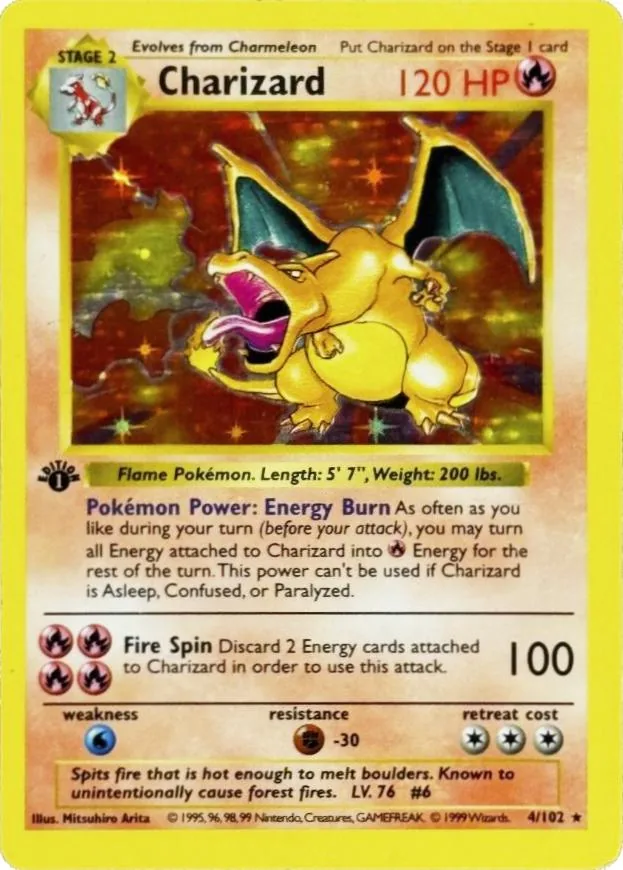
The Most Valuable Charizard Cards (and What They Are Worth)
No Pokémon card carries more weight than Charizard. It is the card that defined the hobby, the one every kid in 1999 wanted, and still the first name typed into every price tracker. But “Charizard” is not one card — it is hundreds, separated by decades, languages and print variants whose values run from a few dollars to the price of a house. Here are the ones that actually matter, ranked by real market value.
Why Charizard leads the entire market
Two things keep Charizard at the top of almost every set. First, durable demand: it is the most iconic Pokémon, so collectors chase it across every era at once — vintage purists, modern set-completers and investors all bidding on the same name. Second, supply that splinters: each era prints a new chase Charizard, but the 25-year-old ones in gem-mint condition keep getting rarer. You can see the whole spread on the Charizard hub, which ranks every Charizard we track by value.
The vintage grails
The undisputed king is the 1999 1st Edition Base Set Charizard — the English card that is Pokémon to a generation. In top grades it sells for tens of thousands of dollars; a flawless PSA 10 is a six-figure asset. One rung down sit its sibling prints: the Shadowless Charizard (printed just after 1st Edition, before the drop-shadow was added) and the far more common Unlimited print — same art, wildly different prices, purely because of scarcity and the little stamp in the corner.
The Japanese side has its own holy grail: the No Rarity Base Set Charizard, the very first print of the 1996 Japanese Base Set, missing the rarity symbol later prints carry. It is the Japanese equivalent of 1st Edition, and in gem-mint it is one of the most valuable Pokémon cards in the world — a PSA 10 sits around half a million dollars. We cover exactly what to look for in the No Rarity guide.
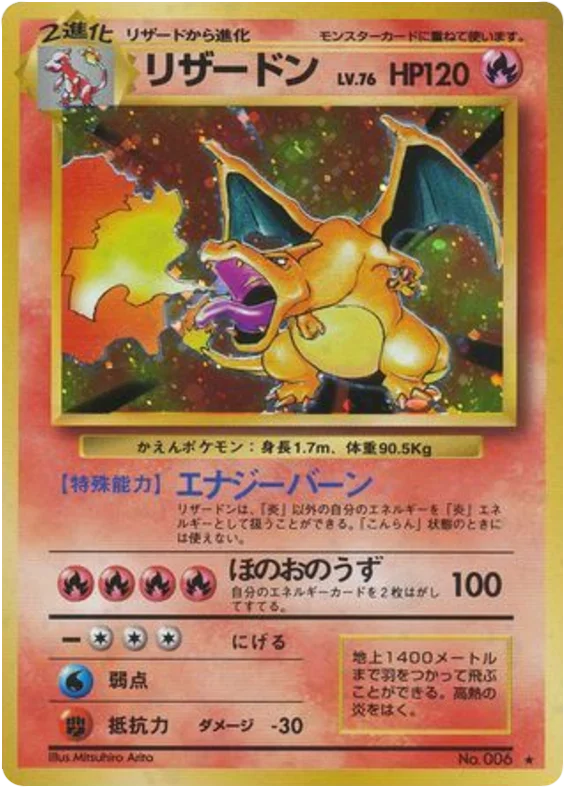
Two more vintage Charizards belong on any serious list: the holographic Shining Charizard from Neo Destiny (the shiny, alternate-colour treatment that kicked off a whole genre of chase cards), and the e-Card era Expedition Charizard, a sleeper grail whose population is far thinner than its fame suggests.
The modern chase Charizards
You do not need a vintage budget to own a valuable Charizard. Every modern era mints a new chase version, and the best ones hold serious money:
The Charizard ex Special Art Rare from the Japanese Pokémon 151 set rides the nostalgia of the original 151 line-up; the Charizard VMAX from Champion’s Path became the defining chase card of the pandemic boom; and the Dark Charizard from Team Rocket is the cult-favourite villain variant. For something genuinely rare, the Poncho-wearing Pikachu Charizard is a Japan-only promo that crossover collectors fight over.
How to value a Charizard properly
The number that matters is not the last eye-watering auction — it is the median of recent sales in a single grade. One celebrity buyer or one mis-grade can make a record sale that no normal copy will ever match. That is why every Charizard on PokéTT is marked at its recent median, per grade, with the graded population shown next to it (the full logic is in how we calculate market cap). To go deeper, open the Charizard hub, screen the whole market on the screener, or start from the Japanese Base Set where the story began.
- The vintage kings are the 1st Edition Base Set Charizard (EN) and the No Rarity Base Set Charizard (JP) — gem-mint copies are six-figure assets.
- Shadowless, Shining and Expedition Charizards are the next tier of vintage grails.
- Modern chase Charizards (Pokémon 151 ex, Champion’s Path VMAX, Dark Charizard) hold real value without a vintage budget.
- Value any Charizard by the median of recent sales in its grade — never one record auction.